Solar Innovator System Benefits — Official DIY Solar Power Advantages
Discover what makes the Solar Innovator System a rewarding and practical DIY solar project for everyday homeowners and energy enthusiasts.
Learn How DIY Solar Energy Works
Gain practical, firsthand knowledge of photovoltaic cells, charge controllers, battery storage, and safe electrical wiring — skills that open doors to larger solar projects.
Build a Compact Solar Power Project
The 3D spherical design fits in approximately 12 square feet — practical for yards, balconies, and workshops where traditional flat panels are impractical or too large.
Explore Small-Scale Renewable Power
Every watt of solar power generated at home is one less watt drawn from fossil-fuel sources. A DIY solar project is a tangible first step toward personal energy independence.
Understand Solar Components
By building your own system, you learn exactly what each part does: how solar cells generate current, how a charge controller prevents overcharge, and how a battery stores energy for later use.
Learn Basic Wiring and Energy Concepts
The guide teaches you to measure voltage and current, calculate watt-hours, select appropriate wire gauges, and install protective fuses — foundational knowledge for any energy project.
Build Confidence With DIY Renewable Energy
Completing a working solar build builds the confidence to tackle larger energy projects in the future — adding more panels, a bigger battery, or exploring wind energy as a complement to solar.
Traditional flat solar panels require substantial unshaded roof area and professional mounting. The Solar Innovator System's compact sphere can be placed on a stand, table, or bracket — bringing solar power to spaces where conventional installations are impractical.
Because the sphere has cells facing multiple directions, it continues generating power as the sun moves across the sky without requiring manual repositioning or motorized tracking. This is a practical advantage for set-and-check-later use cases.
- Freestanding on a garden stand or tripod
- Mounted on a flat rooftop section or shed roof
- Placed on a balcony railing bracket
- Transported to a campsite or remote location
- Used as a portable workshop power station
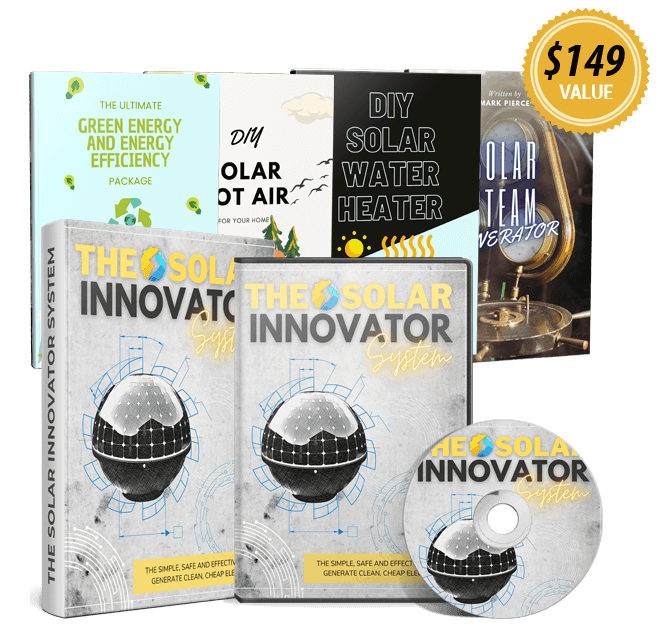
Unlike pre-built solar kits with fixed specifications, a DIY build lets you select components based on your specific budget and power goals. Start with the minimum viable setup and expand when ready.
Need to power just LED lights and a phone charger? Build a small, low-cost system. Want to run a small refrigerator during outages? Add more cells and a larger battery. The guide's principles scale to match your ambition and budget.
Because you sourced and built the system yourself, upgrading individual components is straightforward. Replace worn solar cells, swap in a higher-capacity battery, or add a second sphere to double your energy collection — all without replacing the entire system.
Charge Devices During Outages
A charged battery connected to your DIY solar system can keep smartphones, emergency radios, and LED flashlights powered when the grid goes down — potentially for hours or days depending on your battery capacity.
Power Suitable Low-Wattage Equipment
LED bulbs (5–15W), USB fans, and portable medical devices with low power requirements can be kept running during outages with a correctly sized battery bank. Always verify device compatibility and draw before relying on any solar system for critical equipment.
Build a Basic Backup-Power Plan
Use the Solar Innovator System as the foundation of a broader preparedness setup. Combine solar charging, battery storage, and efficient LED devices to create a resilient household energy backup that doesn't depend on fossil fuel generators.
Every device you power from your solar build is one less disposable battery purchased or one less dollar added to your utility bill. Small wins compound over time, especially for regularly used devices like phone chargers and LED lights.
Building your own system teaches you to think in kilowatt-hours — the unit on your electricity bill. Understanding how much energy your devices use and how much solar can realistically provide gives you the knowledge to make smart energy decisions.
The biggest gains come from pairing solar generation with smart consumption — switching to LED bulbs, using power strips with timers, and identifying and eliminating phantom loads. The guide's bonus content addresses these energy efficiency fundamentals.
Output Depends on Sunlight and Components
Energy production varies significantly by location, season, component quality, and build precision. There are no guaranteed output levels — measure your system's actual performance.
DIY Builds Require Safety Planning
Electrical work carries real risks. Correctly size all fuses, use appropriate wire gauges, install DC disconnects, and never rush wiring steps. Read the guide's safety section carefully before starting.
Not a Replacement for Certified Grid-Tied Solar
For meaningful home electricity generation, a professionally installed, grid-tied solar system is the appropriate solution. This DIY guide is a learning and small-scale power project, not a home energy replacement.
Check Local Electrical Requirements
Local codes, HOA rules, and utility agreements may affect where and how you can install a DIY solar system. Check with your local authority before installation, especially for roof-mounted systems.
People with no solar experience but a willingness to learn get the most from this guide. The step-by-step format and video support are specifically designed for newcomers to the technology.
Anyone building an emergency preparedness plan will find the Solar Innovator System a practical low-cost addition — providing a renewable charging source that doesn't depend on fuel availability.
Those who enjoy experimenting with technology and energy systems will find the build process itself rewarding, with many opportunities to customize, test, and optimize the system's performance.
Renters, apartment dwellers, and those with limited outdoor space who cannot install traditional rooftop solar panels may find the sphere's compact footprint a viable way to experiment with solar power.
A small DIY solar build can offset a portion of the electricity used by small devices. The overall reduction in your electricity bill will be modest compared to a whole-home solar installation. Think of it as a starting point for energy independence, not a bill eliminator.
No. The Solar Innovator System is designed for small-scale, off-grid use — powering lights, USB devices, and small electronics. Whole-home solar requires a professionally installed system with a capacity many times larger than a typical DIY build.
Yes. Because it is a freestanding DIY build, you can move it as needed — from the backyard to a campsite, or from a balcony to a workshop. The portability is a meaningful advantage over fixed rooftop panels.
The 3D spherical arrangement allows cells to face multiple directions simultaneously, capturing sunlight from a wider range of angles than a fixed flat panel. This reduces the need for manual repositioning. Independent third-party efficiency data specific to the Solar Innovator System design is not publicly available — results depend on build quality and conditions.